
Aedifion is revolutionizing real estate sustainability with AI-driven solutions that enhance building efficiency without renovations. By optimizing energy use through data analysis and smart automation, they help reduce carbon footprints instantly. Backed by World Fund and the EIF, aedifion is scaling its impact to support Europe’s net-zero goals.
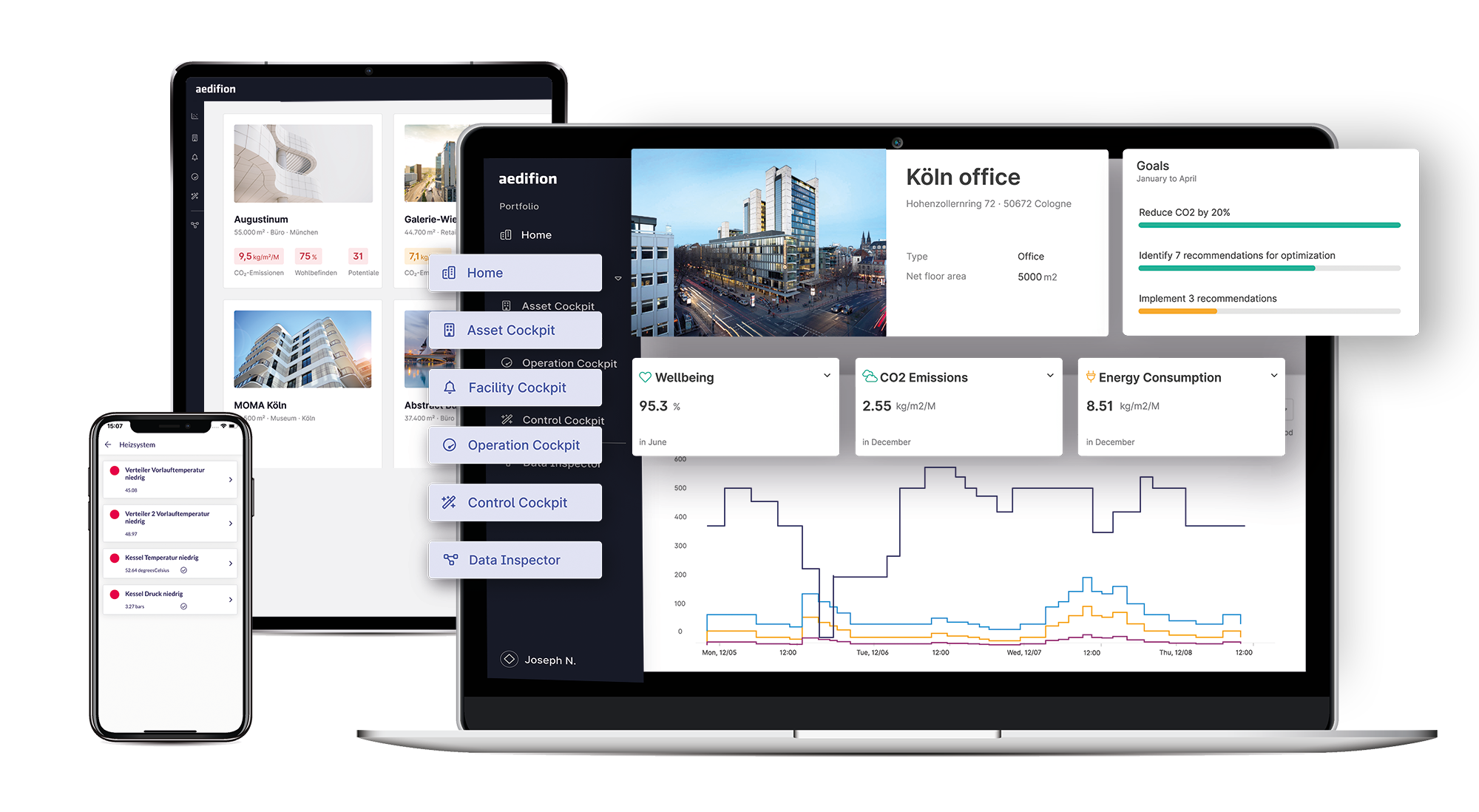
The buildings sector continues to have a significantly large carbon footprint, with heating and cooling systems, electricity consumption, and of course the manufacturing of construction materials such as cement, steel, and aluminium driving CO2 emissions. While efforts to generate cleaner energy are in full swing, part of the solution is also improving our energy consumption patterns. Cloud-based AI software solutions, in particular, are transforming today’s inefficient buildings into self-optimising virtual power plants of the future.
Light touch, large efficiency
“Buildings are one of the most essential parts of the energy system in Europe,” says Johannes Fütterer, CEO & co-founder of Cologne-based aedifion. Founded as a spin-off from a research project of the leading building technology research institute at RWTH Aachen University, aedifion focuses on improving efficiency and sufficiency in the built environment, mainly large commercial buildings. “There’s no renovation involved, no retro-fitting, no works. Just data collection and analysis.” The company’s innovative approach has three main components: “The first part is compiling the data of all the existing systems within a given building and mapping them as a virtual model.” Johannes explains. “Then we analyse that data to detect faults and inefficiencies, and finally we ensure sustainable and economical operation with modern control algorithms and artificial intelligence, which can yield as much as a 40% increase in energy efficiency.”
Immediate gains
“What we do is to provide minimally invasive changes and light solutions that take effect immediately,” he adds. The energy savings can often come from unexpected places: “Typically, a building’s air handling units operate during weekends - this could be optimised. There are also air filters in these units that are maintained periodically, every three to six months. This doesn’t make sense since seasonal changes can impact these filters. So switching to data-based maintenance rather than predictive maintenance can generate energy savings too.”
Getting to net zero
However, decarbonising commercial buildings with an asset-light approach requires a robust funding environment. In late 2022, the company received an equity investment from World Fund, a German venture capital firm backed by the EIF under the InvestEU programme, helping them to further develop their product and expand their business. With more than 75 customers under their belt, Johannes and his team see energy- and resource-efficient facility management as integral to Europe’s sustainability goals. “Buildings can offer a lot of flexibility in energy consumption. And we can even help buildings get to net zero.”
About aedifion
EIF financing
These are funding initiatives from our portfolio used to support this company
InvestEU Equity productsDutch Future Fund (DFF)ERP FacilityLfA FacilityFinancial intermediaries
EIF partners participating in this transaction to match our resources
Deutsche BankTags
Social contacts

Related products
EIF other initiatives similar to this transaction which supported this company
Equity ProductsInvestEU